Henna and Inheritance
An ode to being a brown girl

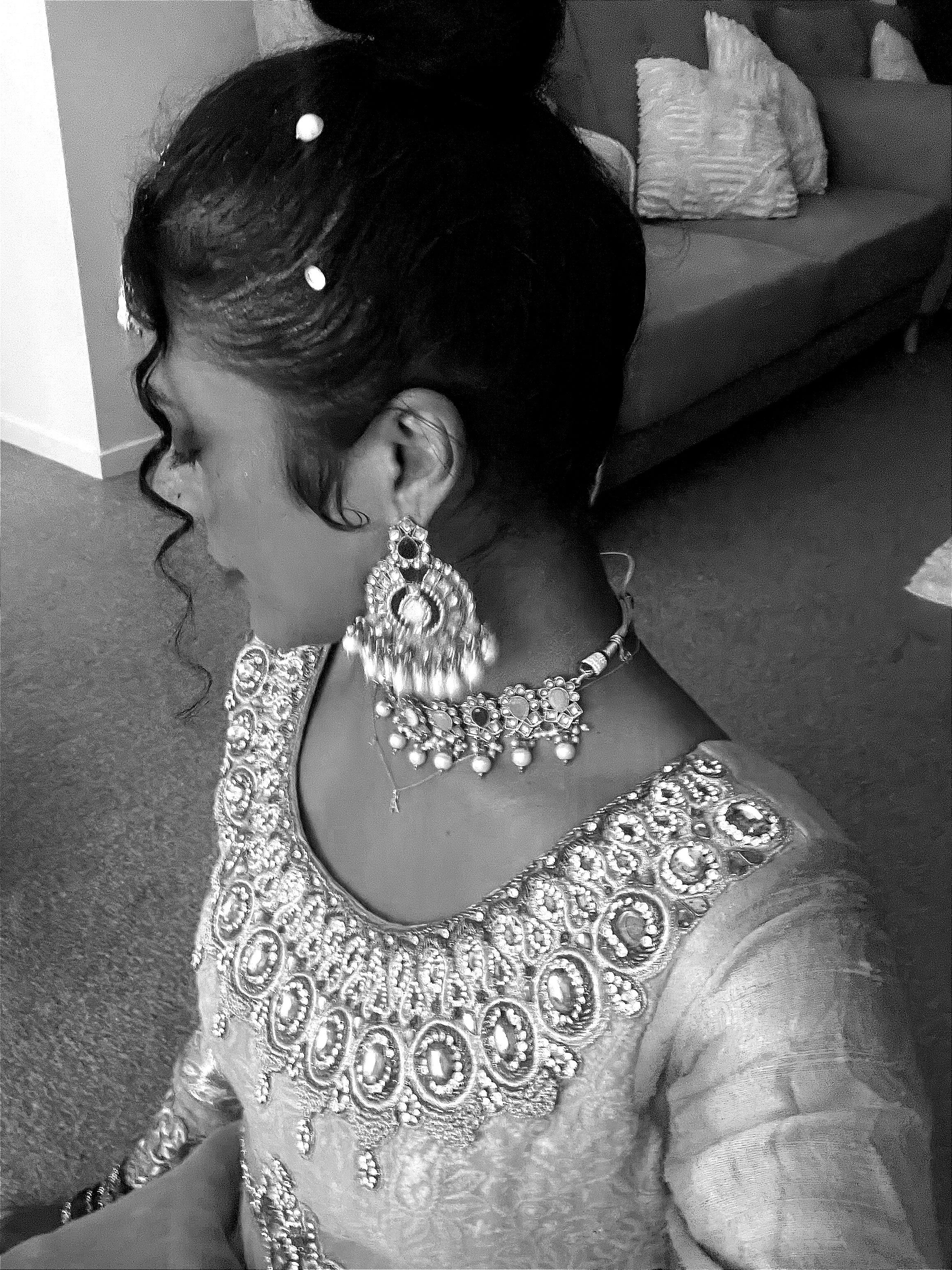
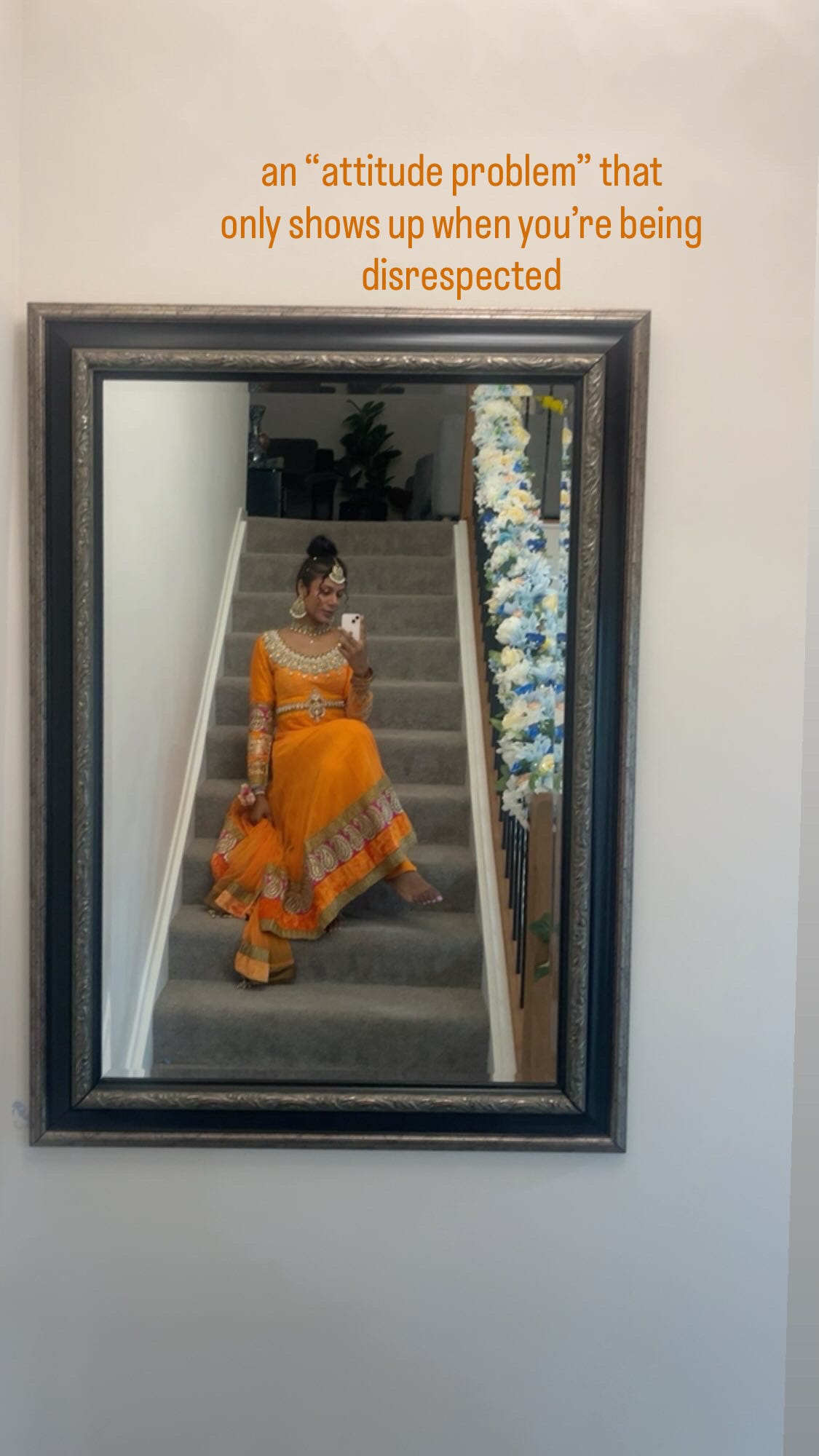
We arrived late hand in hand. All eyes on us as soon as we walk in. The hurrying as we have now caused the party to run late. A quick appreciative glance and thumbs up is given as my outfit, makeup, and hair is analysed. Each outfit this week had been carefully curated by an overseas stepmother. Not the family disappointment tonight, Inshallah.
It was my first cousin’s Mehndi night. We had spent the afternoon covering up the effects of the latest “cyclone” with band aids and flowers.
I felt like I had stepped into another land, and Lincoln road thoroughfare had faded into a Nadi Narnia.
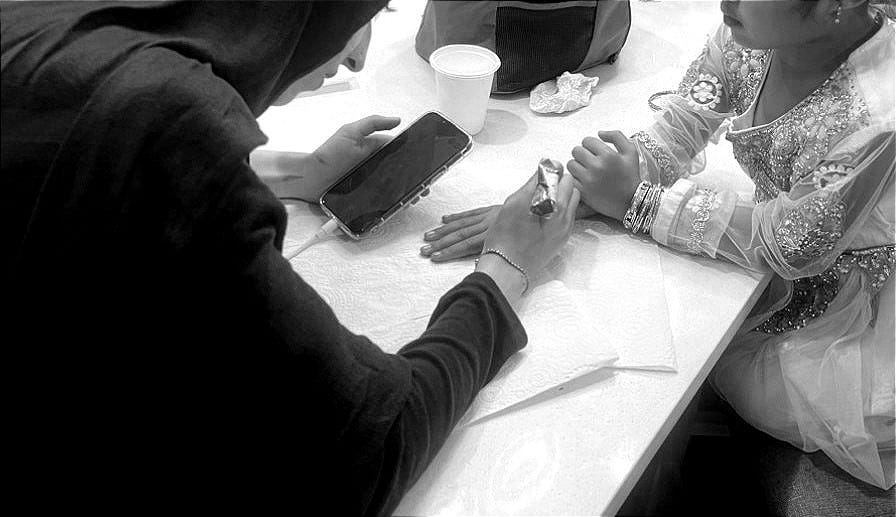
As the night moved on, the henna artist arrived. We picked our designs and waited for it to dry. She suggested I get Rihanna’s hand tattoo. Idk what about me gave her the vibe, but I rolled with it. The room was full in the way these rooms always are. The smell of Biryani, Pumpkin curry, and Kava filled the air. Aunties carrying the night, laughter layered over music, generations existing side by side without needing to explain themselves, except for the occasional TikTok trend lore spill from niece to aunt.
And yet, I felt completely still.
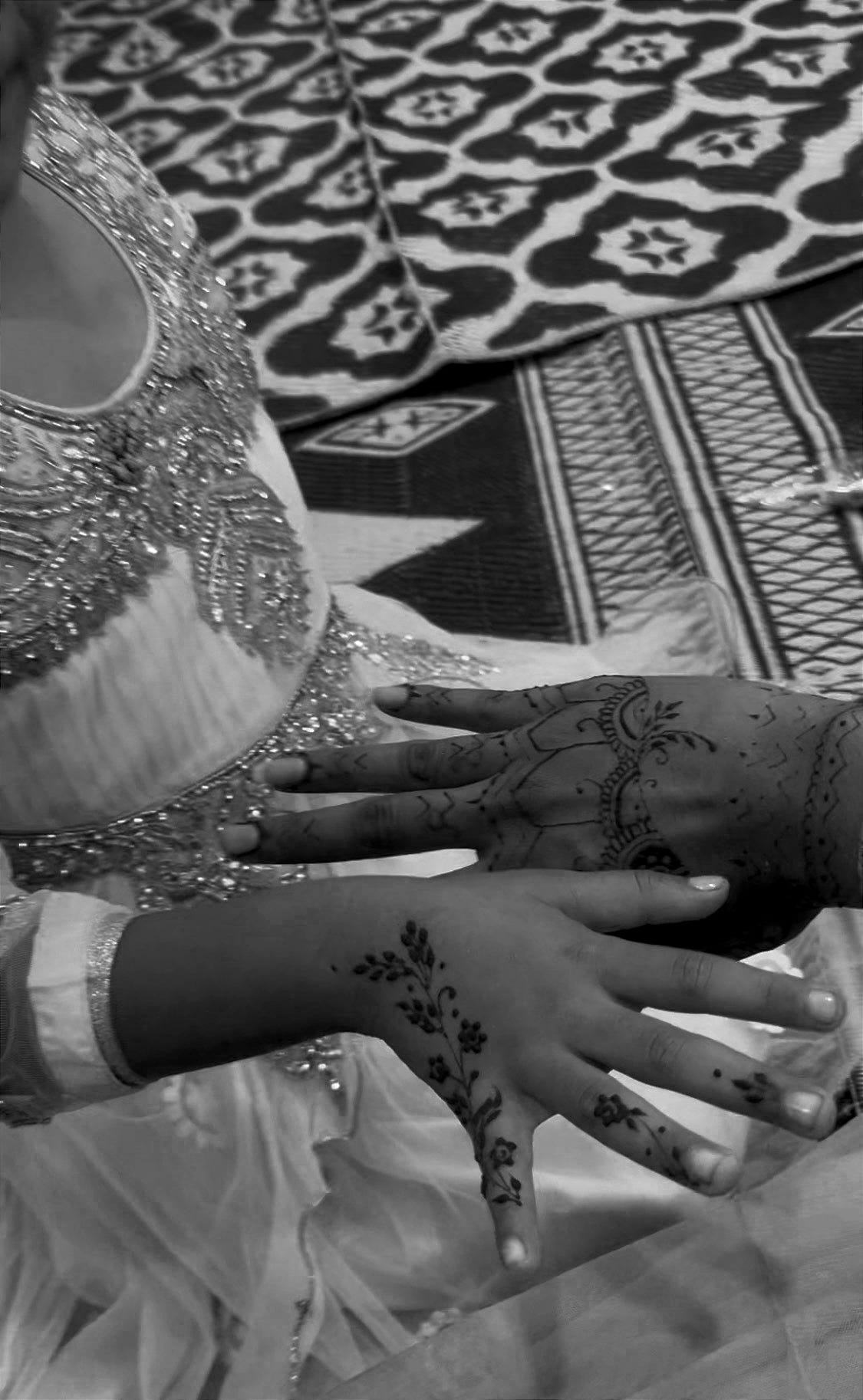
I looked at my daughter, like really looked at her. She wasn’t Boo from Monsters Inc anymore. She was growing, yet her small hands stretched out, careful, patient. Already learning how to take up space neatly. Already being initiated into something she didn’t yet have the language to question.
And it hit me.
One day, this might be her.
Not just the customs. The expectations.
Because moments like this don’t exist outside of home. They never have.
They are where gender is rehearsed, softened, disguised as beauty.
I know that because I lived it every day. I still feel the echoes of it.
I was pushed away from my culture early, not by the faith itself, but by the hierarchy that came wrapped around it. A hierarchy that was never named as such, but enforced daily, quietly, thoroughly.
Boys in my family could exist freely in their bodies. Shorts. No shirt. No one flinching, no one correcting. Their presence was neutral. Unquestioned.
Mine was conditional.
I had to cover my knees. Sit properly. Move carefully. My body wasn’t mine; it never was. I carried that far into adulthood. I was something to be managed in relation to others. Something that could provoke, disrupt, invite consequence, and it did, didn’t it? There was only one thing men wanted from me, I was always told.
Watching The Testaments recently broke something open in me. Maybe that’s why I was so drawn to 1984 and Brave New World growing up. I recognised that feeling of being watched, shaped, and contained.
That difference wasn’t accidental. It was structural.
They could bring their girlfriends home, openly, casually. This was seen as natural, even expected.
I learned to love in secret. Each boyfriend somewhat understanding of my codes, scriptures, and missed calls.
I understood that I need to split myself in two. The version that existed publicly, and the version that felt everything privately, quietly, and often online friends witnessed. That kind of division doesn’t just disappear overnight. It reshapes who you become. It makes it easier for you to become a chameleon in different social groups. Even my relationship to a higher power became mediated through this imbalance.
My gifted prayer beads were now worn thin between my fingers.
I had to consume and practice faith in fragments.
I felt spiritual but never fully safe and seen when needed most.
Because when access to religion is filtered through control, it stops feeling like connection and starts feeling like surveillance. It starts to feel like Big Brother, one that I didn’t ask for. Monitoring but never stepping in.
That distinction matters. Politically, culturally, personally.
Because what I was experiencing wasn’t just “tradition.” It was patriarchy, which was operating through religion, through family structures, through unspoken rules that benefited some and restricted others.
And like many girls, I internalised it before I could name it.
So, I left, early. As fast as I could.
Or at least, I thought I had to.
For a long time, I believed freedom meant distance. That to reclaim my autonomy, I had to reject everything associated with what confined me.
But sitting there at the Mehndi, watching my daughter’s hands being adorned, I realised something more complicated was unfolding.
Culture and religion are not neutral, but it is also not fixed.
It can be used to control.
And it can be reclaimed.
That reclamation is political.
Because choosing to pass something down differently is an act of resistance.
I don’t want my daughter to inherit silence dressed up as modesty.
I don’t want her to learn that her body is a problem to solve while boys are allowed to simply exist.
I want her to see me talking back to uncles that make me uncomfortable.
I want her to see me start asking why?
I want her to see me putting up those boundaries and using that block button more often.
I don’t want her to associate faith with fear, or obedience with worth.
And I refuse to reproduce those dynamics in the name of culture or for the sake of history and saving a makeup covered face.
Feminism, for me, lives in that refusal.
Not as a rejection of half of where I come from, but as a confrontation with it.
It asks harder questions:
Who benefits from this rule?
Who is being protected, and from what?
What is sacred, and what has been strategically preserved to maintain power to a certain gender?
Because not everything we inherit is meant to be kept.
Some of it needs to be named.
Some of it needs to be dismantled.
Some of it needs to end with us.
And some of it, like this moment, like the beauty of henna, like women gathering in softness and strength, deserves to be carried forward, but without the weight that once came with it.
That’s the line I felt myself drawing that night.
Not between religion and rejection.
But between control and choice.
One day, it will be her hands.
Her moment.
And I want her to step into it whole. Not divided. Not negotiating her worth in real time.
Whole.
That is the inheritance I am fighting for.
Not just as a mother, but as a woman who refused to accept that this is simply the way things are.
xo
Naaz
this hits me, i deeply relate to it, i commend your ability to put the right feelings in multi-perspective way, will love to read more, really!. want to be moots? feel free to read my articles as well if u have time. tsymm